The Handwritten Charm of Vintage Story for Modern Designers
There’s something deeply personal about a handwritten note. In a digital world saturated with crisp, geometric sans serifs, the imperfect, flowing lines of human script carry an immediate emotional weight. For designers and creators seeking to inject that warmth and authenticity into their projects, the Vintage Story typeface offers a compelling solution. This premium script font captures the essence of old-world craftsmanship, blending rustic charm with the versatility needed for contemporary design applications. Whether you're drafting a wedding invitation, crafting a logo for a boutique brand, or creating social media graphics that stop the scroll, understanding how to harness this font's unique character can elevate your visual communication significantly.
More Than Just a Pretty Script: The Anatomy of Vintage Story
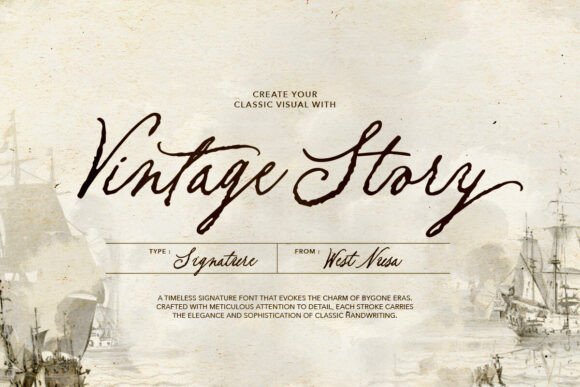
At its core, Vintage Story is a handwritten font, but that simple classification undersells its sophistication. Its visual appeal lies in its carefully balanced imperfections—the slight variations in stroke weight, the organic flow of its curves, and the subtle texture that mimics ink on paper. Unlike many script fonts that can feel either too formal or too casual, Vintage Story occupies a sweet spot. It feels crafted, intentional, and timeless. This makes it a versatile display font suitable for a range of creative projects.
What truly sets it apart, however, are its technical features. The inclusion of ligatures—special character combinations that connect more naturally, like "st" or "fl"—prevents the awkward spacing that can plague lesser script fonts. Furthermore, the alternates provide multiple versions of key letters, allowing you to avoid repetitive patterns and create a more authentic, hand-lettered look. This level of detail is what separates a standard font from a genuine design asset.
Where Rustic Elegance Meets Practical Application
The true test of any creative font is its utility. Vintage Story’s personality makes it a natural fit for projects where emotion, nostalgia, or artisanal quality are central themes. Consider its application in brand identity. A small-batch coffee roaster, a local florist, or a handmade soap company could use Vintage Story for their logo and primary wordmark. It immediately communicates a story of care, tradition, and handcrafted quality, helping to build instant brand recognition in a crowded market.
Beyond logos, its applications are vast:
- Print & Packaging Design: Use it for product labels, bakery boxes, or craft beer packaging to convey a homemade, premium feel.
- Invitations & Stationery: Perfect for wedding suites, save-the-dates, and event branding where a personal touch is paramount.
- Editorial & Publishing: Ideal for chapter headings in novels, magazine pull quotes, or titles for blogs focused on lifestyle, travel, or DIY crafts.
- Digital Presence: A standout choice for website headers, email newsletter graphics, and social media quotes that need to feel intimate and engaging.
- Merchandise: Effective for t-shirt designs, tote bags, and mugs, especially when paired with complementary imagery.
Integrating Vintage Story into Your Design Workflow
Adopting a new typeface into your toolkit requires more than just liking its appearance. To use Vintage Story effectively, you need to consider font pairing and context. As a script font, it generally works best for headlines, logos, and short bursts of text. For body copy, readability is key. Pair it with a clean, neutral sans serif font or a sturdy serif font for supporting text. A combination like Vintage Story for a headline and a simple geometric sans serif for paragraphs creates a beautiful hierarchy that guides the reader's eye without causing fatigue.
Always test your pairings in context. Does the font look as good on a mobile screen as it does on a printed poster? Check the kerning and spacing, especially when using the ligatures and alternates. Most importantly, ensure your use aligns with the project's goals. While Vintage Story is a premium font that adds significant value, it might not be the right choice for a tech startup or a corporate financial report. Its strength is in its personality—match it to brands and projects that share its values of warmth, craftsmanship, and narrative.
A Smart Choice for the Savvy Creator
Finally, practical considerations matter. When investing in a commercial font like Vintage Story, always review the licensing. Ensure it covers your intended use, whether for personal projects, client work, or products for sale. The fact that it supports multiple languages is a significant bonus, expanding its utility for international projects or diverse audiences.
In the end, choosing a typeface is a strategic decision. It’s a foundational element of visual consistency and a direct line to your audience's emotions. Vintage Story isn't just another handwritten script; it's a tool for storytelling. It offers a bridge between the analog past and the digital present, providing designers with a way to make their work feel more human, more thoughtful, and ultimately, more memorable. By integrating it thoughtfully, you can add a layer of authenticity that resonates far beyond the screen.