Cowboy: A Typeface That Marries Rugged Spirit with Refined Design
There's a certain allure to the American West—a feeling of open spaces, untamed ambition, and a quiet, confident strength. Capturing that essence in a design project requires more than just a stock image of a sunset; it demands typography that carries the same spirit. The Cowboy font steps into this role with remarkable grace, offering designers and creators a tool that is both authentically rustic and surprisingly elegant. It’s not about mimicking a saloon sign; it’s about channeling a timeless attitude of bold individualism into modern creative work.
More Than a Wild West Cliché
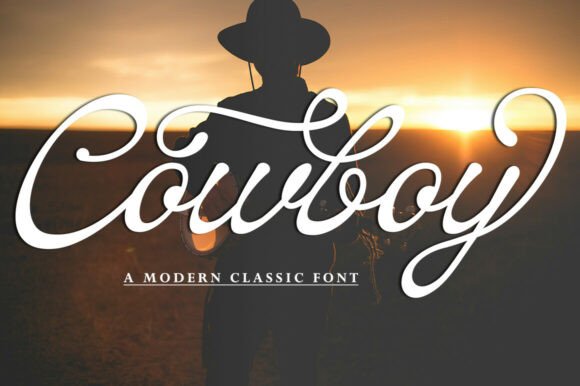
At first glance, one might expect a font named Cowboy to be all spurs and dust. Instead, this typeface presents a sophisticated take on Western aesthetics. Its letterforms are built on smooth, confident curves and refined details that prevent it from feeling kitschy or overly themed. The serif font foundations give it a classic, readable structure, while the subtle artistic flourishes in the terminals and serifs add a layer of handcrafted character. This balance is its greatest strength. It feels personal and full of personality, yet it maintains the clarity and professionalism needed for serious applications like brand identity and logo design.
Think of it as the typographic equivalent of a well-made leather jacket: it has rugged roots, but it’s crafted with precision and style that elevates any outfit. For a small business owner creating a brand identity for a craft distillery, a boutique hotel, or an artisanal goods shop, Cowboy provides an instant narrative. It tells a story of quality, heritage, and authenticity without a single word of copy.
Practical Applications for the Modern Creative
The true test of any premium font is its versatility. Where does a typeface with this much character actually work in today's design landscape? The answer is broader than you might think.
- Branding & Logo Design: Cowboy excels as a display font for logos, wordmarks, and taglines. Its strong character makes it instantly recognizable, helping to build brand recognition. Pair it with a clean sans serif font for body text to create a striking contrast that is both dynamic and readable.
- Packaging & Merchandise: On product labels, shopping bags, or merchandise like t-shirts and hats, this creative font adds a tangible, artisanal feel. It suggests that what’s inside is made with care and has a story behind it.
- Invitations & Editorial Layouts: For event invitations, menu designs, or magazine headlines, Cowboy brings a touch of vintage sophistication. It’s perfect for projects that aim for a rustic-chic or heritage aesthetic, from weddings to restaurant branding.
- Digital Presence: Use it strategically on websites, blogs, and social media graphics. A bold heading set in Cowboy can stop the scroll and define a visual tone for your content. It’s particularly effective for quotes, promotional banners, and featured article titles where you want to make a strong impression.
The key is to use it with intention. Because it has such a distinctive voice, it’s best employed for headlines, logos, and prominent display text rather than long paragraphs of body copy, where readability is paramount.
Integrating Cowboy into Your Design Workflow
Adopting a new typeface into your toolkit is about more than just liking how it looks; it’s about ensuring it serves your project’s goals. Here’s how to approach working with a font like Cowboy to get the best results.
Start with the Project’s Soul. Before you even open your design software, ask: What is the core feeling or message of this project? Is it adventurous, trustworthy, luxurious, or folksy? Cowboy’s personality leans toward confident, heritage-inspired, and artistic. If that aligns with your project’s soul, you’re on the right track. For a tech startup, it might not be the primary choice, but for a sustainable outdoor brand, it could be perfect.
Master the Font Pairing. A strong font pairing is essential for visual consistency and hierarchy. Cowboy’s detailed serifs make it a natural companion to simpler, geometric sans-serifs like Montserrat or Lato. For a more classic, editorial feel, it can also pair beautifully with a traditional serif like Garamond. The rule of thumb is to let Cowboy be the star of the show in headlines while allowing its partner font to handle the supporting role of body text with quiet efficiency.
Always Test for Readability. View your design at the actual size it will be used. A headline that looks magnificent on a 27-inch monitor might become illegible as a small website button. Test it in both digital and print mockups. Check the spacing between letters (tracking) and ensure the elegant details don’t blur together at smaller scales. This step is non-negotiable for maintaining a professional presentation.
Explore the Included Styles. Many commercial font families come with multiple weights or styles—like Regular, Bold, Italic, or even a complementary script font. Check what variations are included with Cowboy. Having a bold version can give you more flexibility for creating emphasis within your headlines, allowing for more nuanced typographic hierarchy in a single project.
Building a Brand with Character
In a crowded marketplace, audience engagement often hinges on emotional connection. Typography is a silent ambassador for your brand’s personality. The right typeface can make a brand feel more approachable, more luxurious, or more innovative. Cowboy, with its blend of the familiar and the artistic, helps build a brand that feels both trustworthy and intriguingly distinctive. It suggests a narrative, inviting your audience to lean in and learn more.
For the content creator or marketer, this translates to assets that are more shareable and memorable. A blog header set in Cowboy doesn’t just label your post; it sets a mood. A social media graphic with this typeface doesn’t just convey information; it conveys an aesthetic. This consistency across all touchpoints—from your website to your email newsletter to your printed flyers—strengthens your overall brand identity and makes your work instantly recognizable.
Ultimately, choosing a typeface like Cowboy is a decision to infuse your projects with a specific kind of energy. It’s for those who want their designs to speak with confidence, to honor tradition while embracing creativity, and to stand out not by being the loudest, but by being the most authentically themselves. When your typography aligns with your vision, every design element works in concert to tell a more compelling story.