Peterson: A Typeface with Three Distinct Personalities
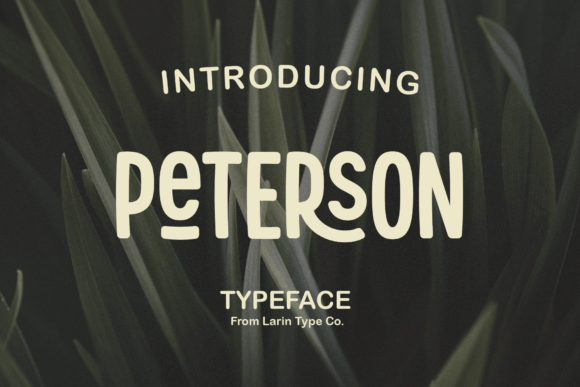
Sometimes, you find a design element that just clicks. It has a certain energy, a versatility that makes you want to use it everywhere. Peterson is that kind of typeface. At its core, it’s a display sans serif, but that simple label doesn’t do it justice. This is a font that arrives with its own wardrobe, offering three distinct styles—Regular, Round, and Rough—each ready to set a different mood for your project. The real magic, however, lies in the treasure trove of alternates and ligatures packed inside, giving you a playground of typographic options to make your work truly unique.
More Than Just a Font: A Toolbox for Visual Storytelling
Think of Peterson not as a single tool, but as a complete toolkit. The Regular style is your clean, confident foundation. It’s crisp, modern, and incredibly legible, making it a fantastic choice for everything from website headers to the main text on a professional business card. It carries a sense of clarity and forward-thinking design, perfect for tech startups, consultants, or any brand that wants to communicate efficiency and modernity.
Then, you have the Round style. This version softens the edges, literally. The rounded terminals give the letters a friendly, approachable, and slightly playful character. Imagine using it for a children’s brand, a boutique bakery, or a wellness blog. It instantly makes your message feel more welcoming and less corporate. It’s the typographic equivalent of a warm smile.
Finally, the Rough style brings in texture and grit. With its distressed, hand-hewn appearance, this style injects authenticity and a craftsman’s touch. It’s ideal for projects that aim for a vintage, artisanal, or rugged aesthetic. Picture it on coffee packaging, craft beer labels, outdoor adventure branding, or concert posters. It tells a story of handmade quality and real-world experience.
Where Peterson Truly Shines: Real-World Applications
The versatility of this typeface family means it can adapt to nearly any creative brief you throw at it. Its strength lies in its ability to be both a standout hero and a reliable supporting player.
For Branding and Logo Design: Choosing a core typeface is a foundational branding decision. Peterson offers a smart solution. You might use the Regular style for your primary logo lockup, ensuring it looks sharp on everything from invoices to social media profiles. Then, you could employ the Round or Rough styles for specific campaigns, sub-brands, or seasonal promotions, creating visual variety while maintaining a cohesive family feel. This built-in flexibility helps strengthen brand recognition over time.
In Packaging and Merchandise: Packaging has mere seconds to grab attention on a shelf or a screen. The distinct personalities of Peterson’s styles are perfect for this. The Rough style can make a artisan product feel genuinely handcrafted. The Round style can make a snack brand feel fun and shareable. The Regular style can give a luxury item a sleek, high-end feel. The same logic applies to merchandise like T-shirts, tote bags, and mugs, where the font itself becomes a key part of the design’s appeal.
Across Digital and Print Media: From social media graphics and blog headers to posters and editorial layouts, Peterson holds its own. Its display nature ensures headlines and key quotes pop, while its inherent readability (especially in the Regular style) makes it suitable for shorter blocks of text or pull quotes. The alternates and ligatures are your secret weapon here; swapping in a unique alternate for a prominent letter in a poster headline or using a tasteful ligature in a wedding invitation can add a layer of custom sophistication that elevates the entire piece.
Practical Tips for Working with a Versatile Typeface
Having a powerful font is one thing; using it effectively is another. Here’s how to get the most out of a family like Peterson.
Match the Style to Your Goal: Before you even start kerning, ask: What is the emotional core of this project? Is it trustworthy and professional (Regular)? Friendly and inclusive (Round)? Or authentic and textured (Rough)? Let the answer guide your initial style selection. Don’t choose the Rough style for a corporate finance report, and don’t use the Regular style if you’re trying to evoke a cozy, rustic cabin vibe.
Test Your Pairings Thoughtfully: A display font like Peterson rarely works alone. You’ll need a companion for body text. Since Peterson is a sans serif, it often pairs beautifully with a clean, neutral serif for long-form reading, or with a simple sans serif for a more unified, modern look. Always test your pairings at the actual size they’ll be used. A font that looks great at 72pt in a logo might become illegible at 10pt in a paragraph.
Don’t Overlook the Extras: The alternates and ligatures are not just decorative extras; they are functional design assets. Take the time to explore them in your design software. Using a discretionary ligature in a logo can make it feel completely custom. An alternate ‘a’ or ‘g’ might better suit the overall tone of your layout. This is where you can push your creativity and avoid having your work look like it came straight from a template.
Readability is Non-Negotiable: Even the most beautiful font fails if people can’t read it. While all three styles of Peterson are designed for clarity at display sizes, be mindful of context. The Rough style, with its texture, might not be the best choice for small legal text on a product label. Use the Regular or Round for any information where immediate comprehension is critical, and save the more stylistic versions for headlines, logos, or artistic elements where impact is the priority.
Understand Your License: If you’re using Peterson for client work or commercial projects, always confirm the licensing terms. A premium font typically comes with a license that covers specific uses, like a certain number of computers or for a commercial product. Ensuring you have the correct license protects you and your client and supports the designers who create these valuable tools.
In the end, a typeface like Peterson is more than just a collection of glyphs. It’s a catalyst for ideas. It provides the visual vocabulary to tell a richer, more nuanced story with your designs. By understanding the personality behind each style and leveraging the creative tools within, you can build more consistent brands, create more engaging content, and produce work that feels both professional and uniquely yours. It’s about giving your projects a voice that is as adaptable and creative as you are.